Vancouver, British Columbia
Discover Vancouver, BC
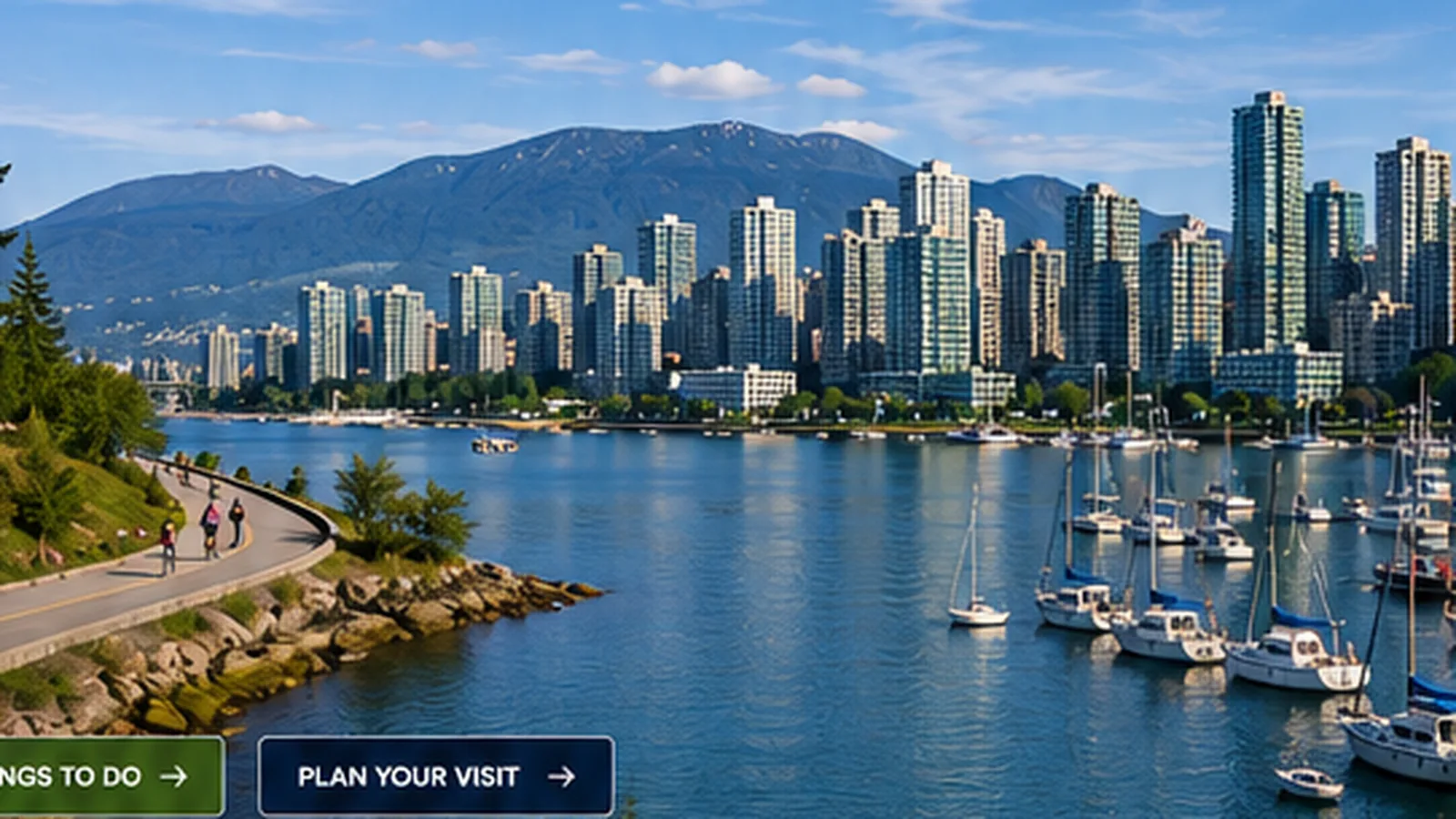
Mountains, ocean and urban neighbourhoods meet in one of Canada's most distinctive cities. Use this independent guide to choose real places, plan realistic travel times and build a Vancouver visit that fits the way you actually want to spend your day.
Start here
Plan your Vancouver adventure
Choose a trip style first, then open the detailed guide for named places, timing, transportation and nearby combinations.

Attractions & landmarks
Stanley Park, Granville Island, Gastown, Chinatown, Canada Place and more.
Explore attractions →
Outdoors & nature
Seawall routes, destination parks, beaches, gardens and viewpoints.
Explore outdoors →
Food & drink
Choose dining areas by neighbourhood instead of crossing the city for every meal.
Food guide →
Markets & local shopping
Granville Island, neighbourhood shopping streets and locally useful stops.
Explore markets →
Events & sports
Major venues, event districts and advice for planning around busy dates.
Events guide →Choose an area
Vancouver neighbourhoods and visitor districts
Vancouver makes more sense when you plan by area. These districts give first-time visitors very different versions of the city.
DowntownCentral base, waterfront and major venues
 West EndBeaches, seawall and Stanley Park access
 KitsilanoBeach, Vanier Park and relaxed west-side days
 GastownHistoric streets, architecture and dining
 YaletownFalse Creek, restaurants and converted warehouses
 Mount PleasantMain Street, cafés, murals and local shopping
First time in Vancouver?
Start with places that naturally fit together
Use these as planning anchors. The detailed guides explain where to go, how long to allow and what makes sense nearby.
A practical first visit
See Vancouver by cluster, not by checklist
Stanley Park pairs naturally with the West End, English Bay and Coal Harbour. Granville Island works with False Creek, Vanier Park and Kitsilano. Gastown, Canada Place and the downtown waterfront form another compact visitor zone.
Grouping nearby places leaves more time for Vancouver itself: waterfront paths, neighbourhood streets, cafés, parks and views between major attractions.
Choose by trip type
Build the day around the people travelling
Families
Use one major attraction as the anchor, then add a beach, park, market or short waterfront walk.
Family guide →Rainy days
Museums, galleries, markets and indoor attractions can keep a wet day useful.
Rainy-day guide →Free & low-cost
Beaches, seawall routes, parks and neighbourhood walks can fill much of a day.
Free things to do →Sports & events
BC Place, Rogers Arena and event districts can change traffic and hotel demand.
Sports guide →Arrivals, departures and longer trips
Plan the transportation part before it becomes the stressful part
Airport, cruise and regional travel need more buffer than an ordinary sightseeing day. Compare the full route, luggage and group needs rather than choosing a mode only by headline price.
YVR Airport
Compare Canada Line, taxi, rideshare and pre-arranged transportation based on your actual destination.
YVR guide →Canada Place cruises
Understand terminal geography, nearby hotels, luggage and pickup timing.
Cruise guide →Getting around
Central Vancouver often works well with walking, cycling and transit.
Transportation guide →Beyond Vancouver
Treat Whistler, the North Shore and other regional destinations as separate trips.
Nearby destinations →How to use this guide
Plan by area, time and travel style
Vancouver rewards realistic planning. Start with one part of the city, decide what deserves a fixed reservation or ticket, then use nearby parks, waterfront walks, markets and neighbourhood streets to fill the day without unnecessary backtracking.
For a 4-hour window
Choose one anchor such as Stanley Park, Granville Island or a museum district. Add only nearby stops.
For a full day
Combine two compatible areas. Downtown plus Stanley Park works; Granville Island plus Kitsilano works. Crossing the region repeatedly usually does not.
When tickets matter
Check the attraction or venue directly before travelling. Admission, timed entry, event pricing and seasonal operations change.
When transportation matters
Luggage, cruise schedules, airport departures, mobility needs and regional trips can justify pre-arranged transportation even when central sightseeing does not require a car.
Planning questions
Vancouver visitor FAQs
How many days should I allow for Vancouver?
A weekend can cover a few major areas, but three to four days gives more room for Stanley Park, Granville Island, neighbourhoods, museums or beaches without turning the trip into constant transportation.
What is a useful area for a first-time visitor?
Downtown and the West End are convenient for many first trips, but the right base depends on cruise access, beaches, nightlife, family priorities and how much time you expect to spend outside Vancouver.
Can I visit Vancouver without renting a car?
Yes. Many central visitor areas work well with walking, cycling and public transit. A car becomes more useful for some regional trips or complicated luggage movements.